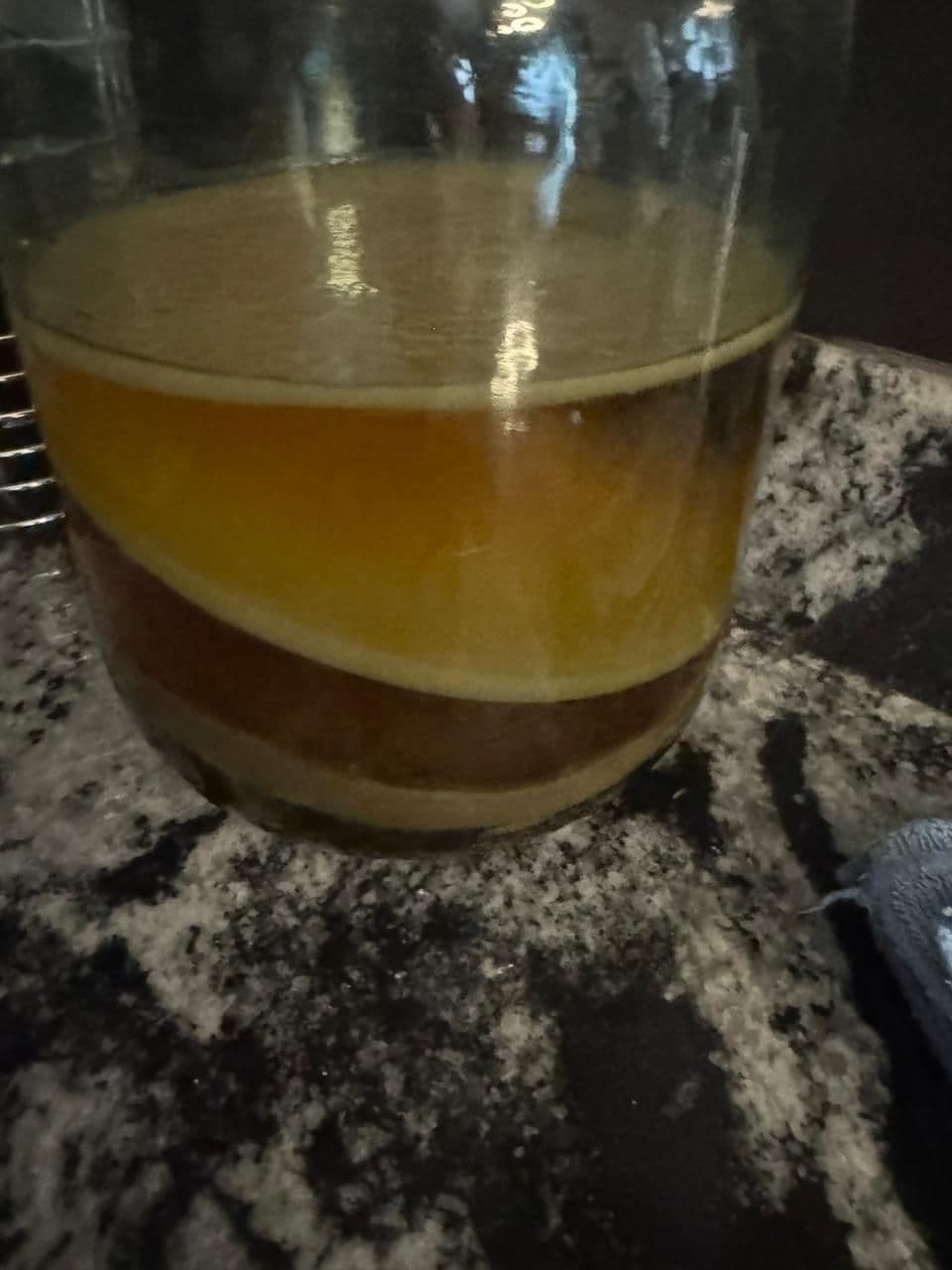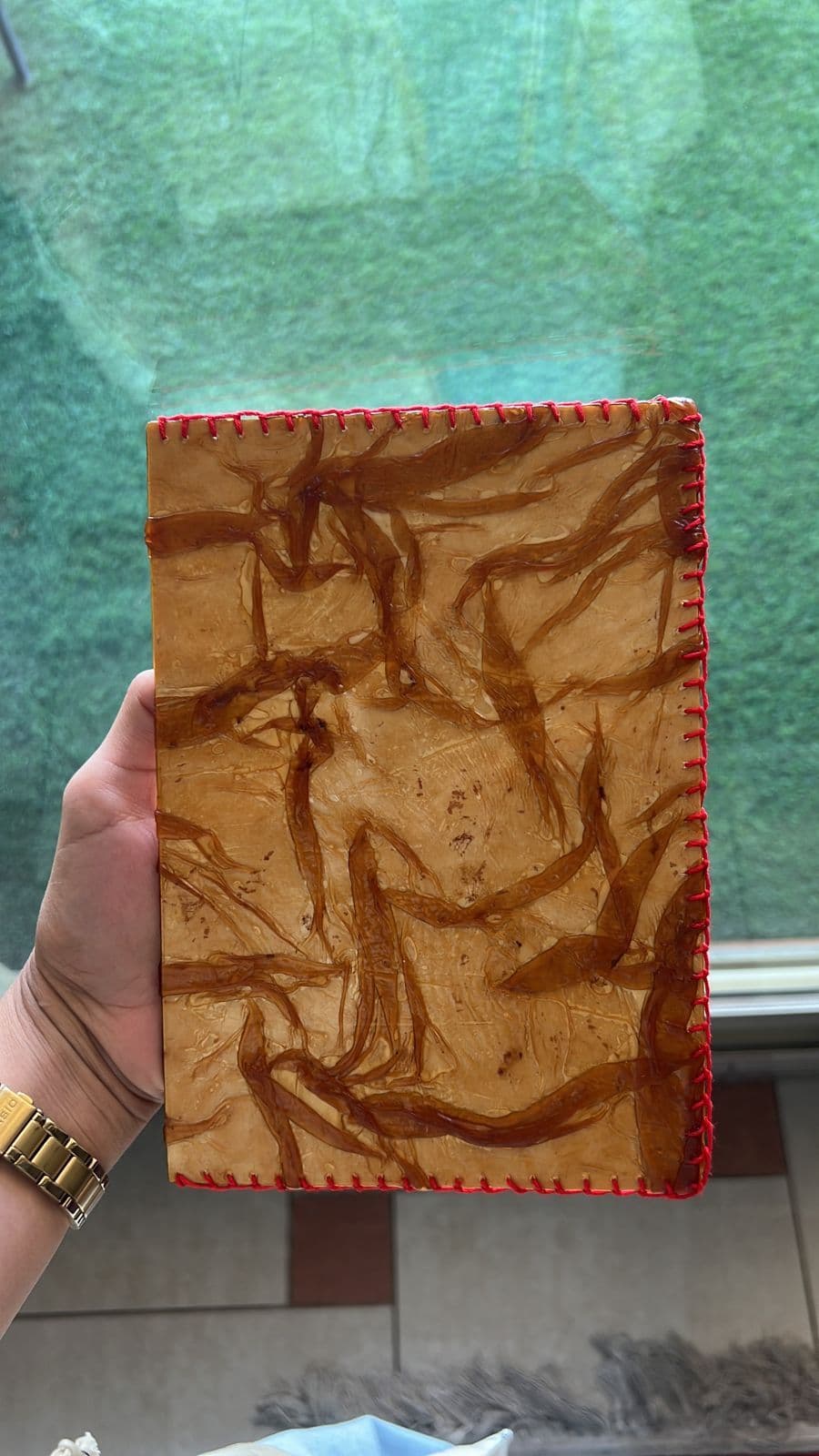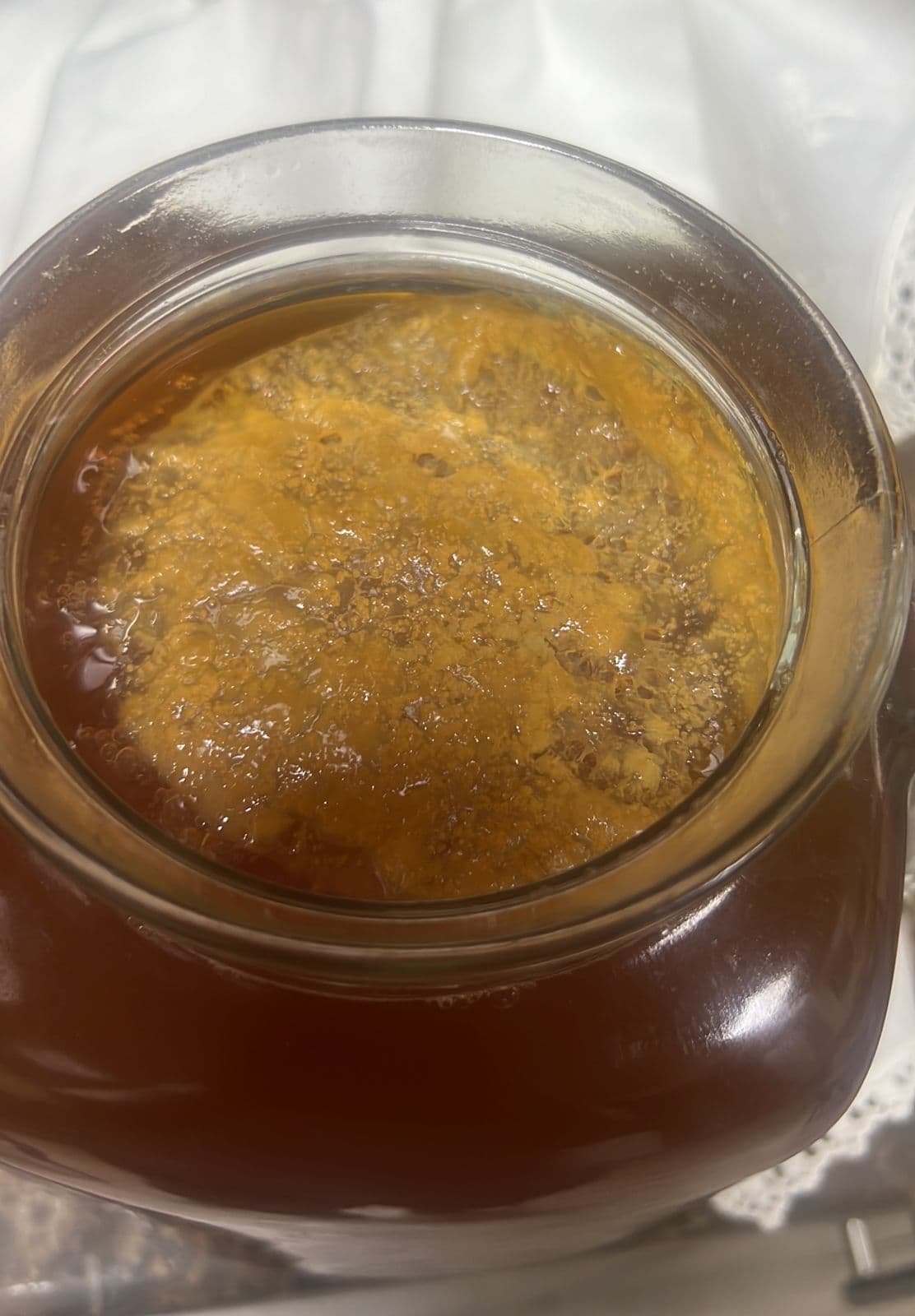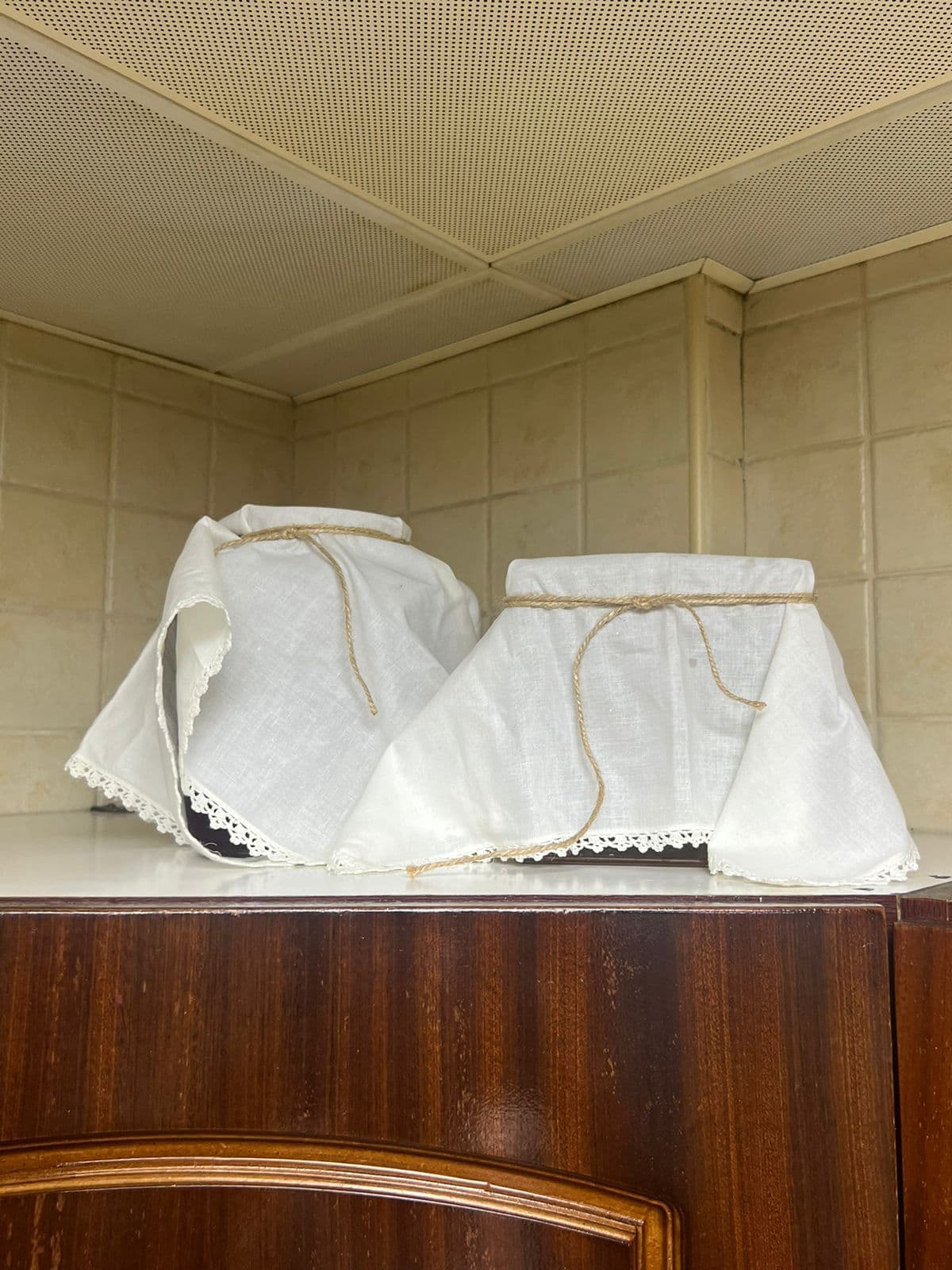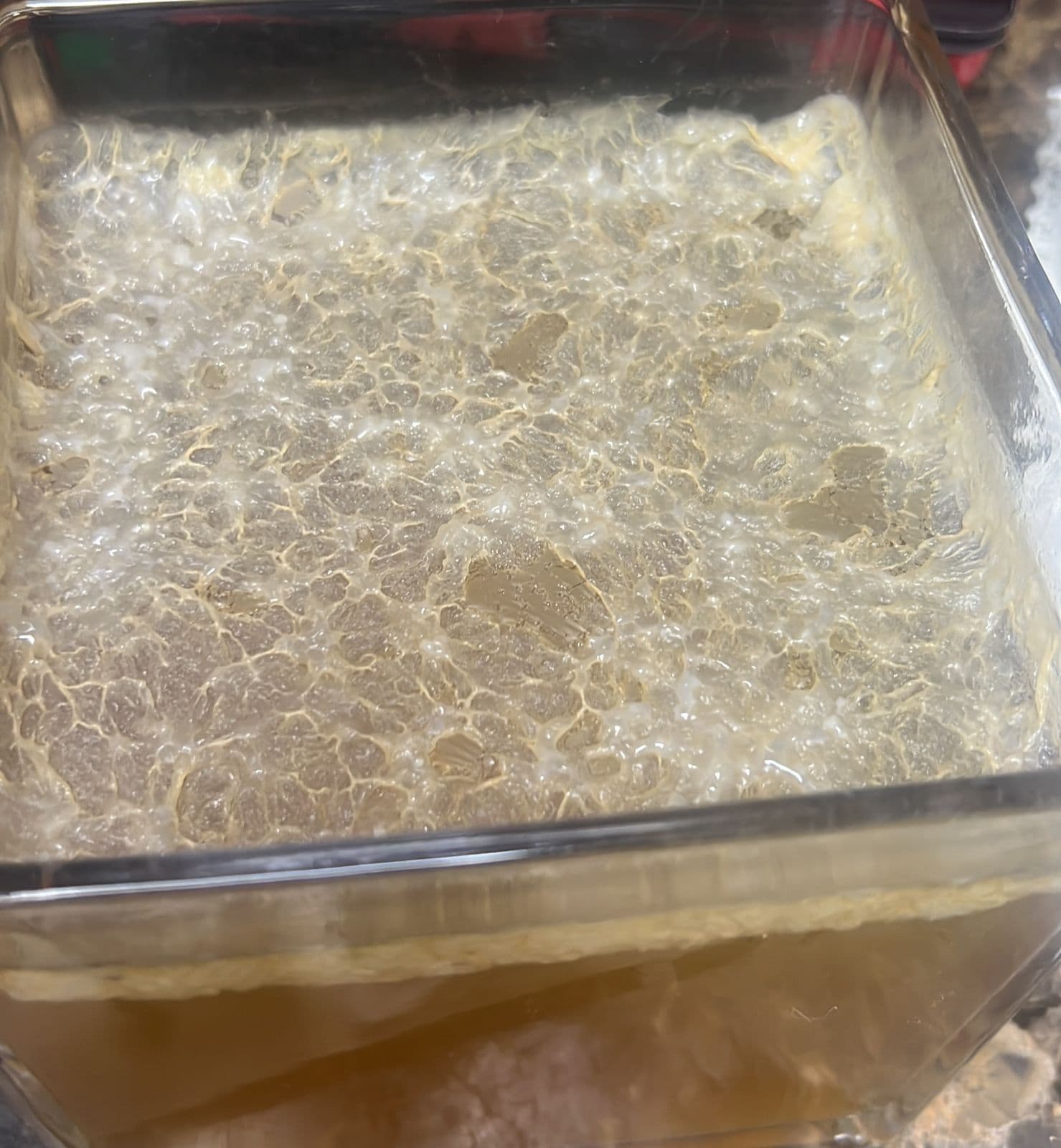

In a bid to explore sustainable materials, 2024 Material Lab Fellow Nadine Ghazal has embarked on a formal, experimental study to grow kombucha leather at home. Derived from the symbiotic culture of bacteria and yeast (SCOBY), kombucha leather is a biodegradable material created through fermentation and holds potential as a sustainable alternative to traditional leather, contributing to a more eco-friendly future in design.
Nadine Ghazal
May - July 2024:
Nadine began the experiment by preparing two batches of SCOBY using different types of tea: black tea and green tea. She ensured that the preparation methods and environmental conditions were suitable for healthy SCOBY growth and monitored for any fluctuations, as they could potentially hinder the fermentation process. The black-tea batch showed more promising results in terms of SCOBY growth, but the designer continued regularly feeding the green-tea batch, expecting improvement.
Next Steps:
Since the SCOBYs are still in the early stages of thickening, further growth is anticipated before they can be processed into leather. Nadine’s next steps will involve regular checks to ensure the SCOBYs reach the desired thickness for leather production, harvesting and cleaning the SCOBYs, and treating them to enhance durability and flexibility.
The potential of kombucha leather is vast. Nadine’s envisioned uses for it range from small leather goods like notebook covers to larger-scale applications in fashion and interior design, making it an excellent eco-friendly alternative to conventional leather by reducing environmental impact. Furthermore, the designer’s exploration of traditional Emirati weaving techniques and embossing aims to create culturally significant products and emphasises the importance of integrating sustainability into every aspect of the design process.
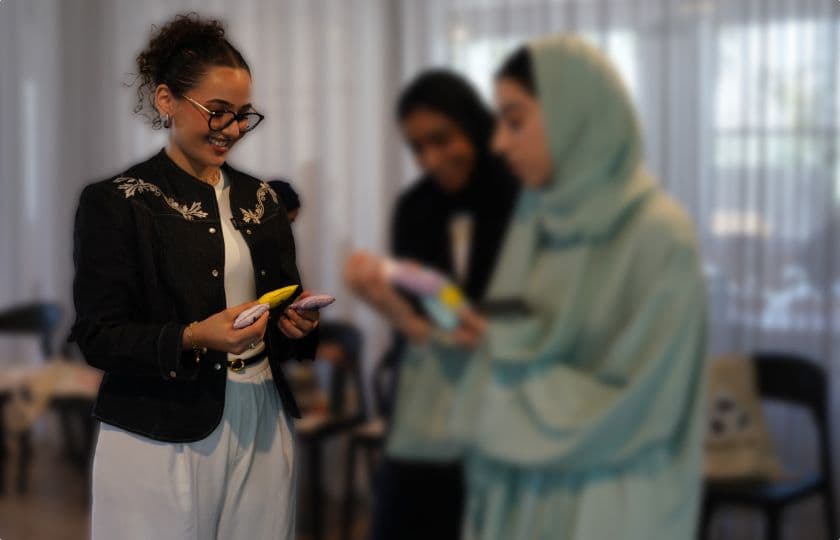
Nadine Ghazal, discovered her love for design in Saudi Arabia before studying Interior Architecture at the American University of Sharjah. She's passionate about reflecting the world's beauty through sustainable practices, driven by compassion. Her goal is to inspire others to embrace sustainable design for future generations' well-being, and is working with kombucha and bioskins during the Material Lab 2024 Fellowship Programme.