The pigeons were peering shyly in their coop as the oohs and ahhs rose in volume while Jessica revealed that these pigeons are practically a feathered historical record of her in-laws’ farming history, which can be traced back hundreds of years. Khalifa bin Humaid Alremeithi, the family’s patriarch, moved his family’s farming territories from Al Ain Oasis to Sweihan in modern times, leaving an inheritance of land and knowledge with his children, grandchildren, and great-grandchildren, two of whom were proudly remarking on their own knowledge of the farm.
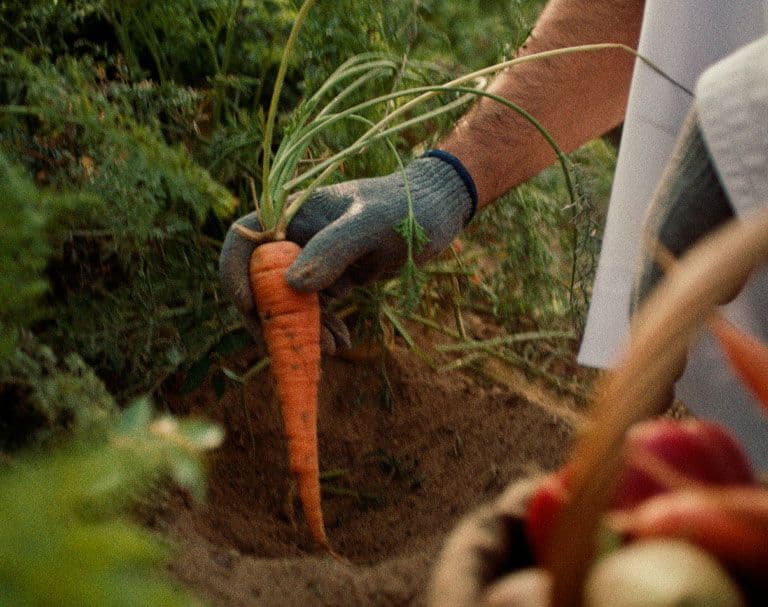
Saleh and Sara Alremeithi frequent their paternal family’s farm with their parents, namely their mother Jessica Queitsch and their father Humaid bin Saeed Alremeithi. Both were presented with an opportunity to have the farm’s produce featured via a menu for Expo Dubai, thus establishing a business called Farm 2 Table. The farm was then commercialised, as it was already sufficiently sustaining the family, and there was a growing interest from friends and visitors of the farm to access its goodness.
On an early April morning, Jessica had invited me and other food and farm professionals and friends to Sweihan to tour the farm. Upon arrival, the guests gathered in the majlis and remarked politely about the distances travelled from their departure points to reach the farm, each leaving from a different city and ending up on the same routes, with rolling sand dunes flanked on each side leading to the farm.
“And what does a caterpillar become after a while?”
“A Pterodactyl! A Velociraptor! A T-Rex!”
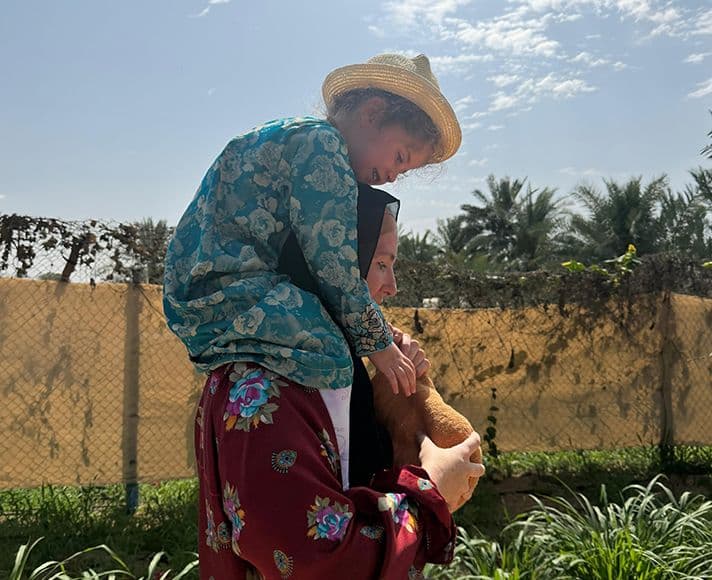
Each dinosaur reveal was punctuated by my exaggerated “surprised” gasps paired with my actual, honest feelings of being impressed. We had just established that caterpillars, who share their leafy cravings with the goats, turn into butterflies, but five-year-old Saleh expanded that image, stretching my own imagination along with his. The one who led us to think of the similarities between the goats’ and caterpillars’ diets to begin with was three-year-old Sara, who was more than willing to demonstrate her front-flip somersault, not letting her blue Mkhawara get in the way of achieving the perfect flip.
As Sara grew weary of her exceptional front-flip demonstrations and the conversational murmurs around her, she voiced what we were all hoping to start doing next: “I want to see the farm animals!” This was followed by an almost silent unanimous agreement to head out. The moment we sprung out of the majlis, our energy collectively and magically got younger and younger.
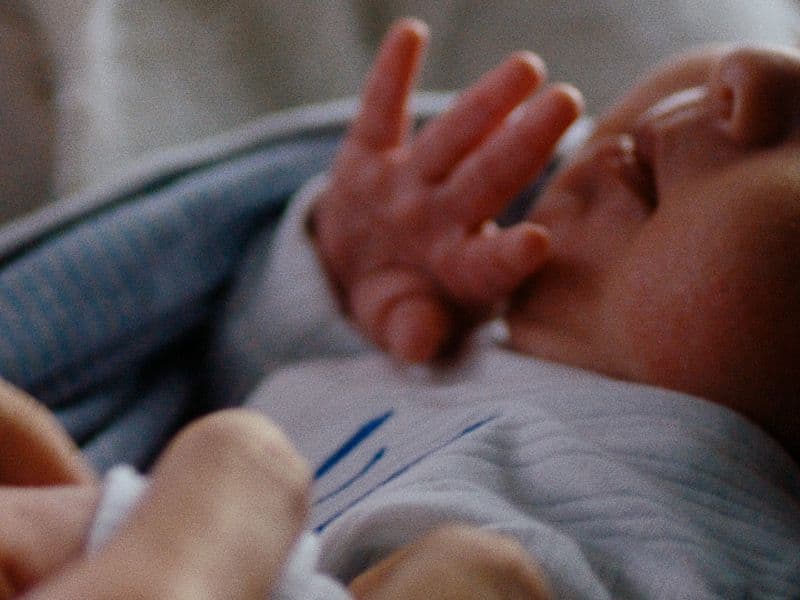
Excitement followed most of the information shared about the types of trees and seeds that had taken to the farm without depleting its water sources. Conversations took place with the turkeys in gobble language, and with the goats and sheep in baa dialects, interjecting with laughter each time, and only softening to a stop to pet and coo at the baby sheep that Jessica gently picked up for us to see. We stood in appreciation of the beauty of the Jersey cows and their creamy milk, while Saleh warned us which bull slobbered the most and was therefore best avoided. In this melange of trees, leaves, flowers, animals, people, farm sounds, laughter, and wonder, one could not help but feel themselves swirling in whimsy.
“What’s your favourite part about the farm?” I asked Saleh.
“The part when it’s not hot.”
Despite the draining heat of the sun, the magic did not wilt. After a slow crawl back into the cooled majlis, our eyes brightened upon seeing the breakfast spread that Jessica had organised for us to taste, all sourced and prepared fresh on the farm. Before we could decide what to add to our plates, Sara awarded us each a plate based on its colour and ornamentation.
With bellies full, the energy seeped back, and it was time to play again. There was a scary cave and a not-so-scary cave in the form of majlis furniture waiting to be explored, and my arms became a toll gate to pass through or get stuck in as Saleh and Sara circled the room. Play was interwoven with conversations about farm life and the children’s education being established first at home, but equally at the farm as well, to ensure an upbringing and an intelligence fortified with encounters in nature.
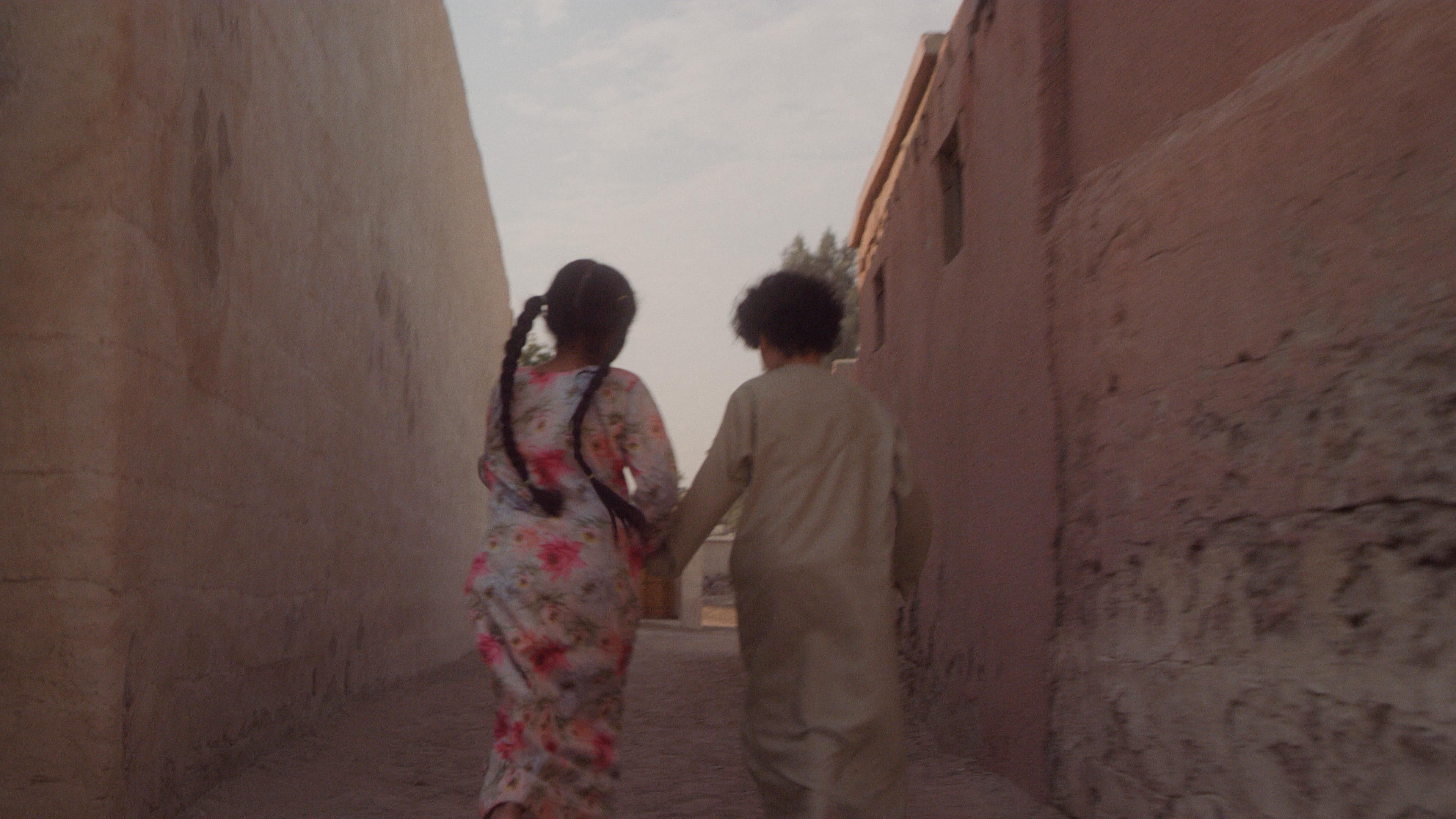
Beyond the sweetness in their bond as siblings, it was clearly felt that they rely on each other to absorb what is seen and felt around them, aiding each other in processing it all in their own way, like a shared language only they can form and understand.
Quoting Prophet Muhammad’s (PBUH) hadith, “Allah loves, when one of you does a thing, that he should do it well,” Humaid, the children’s father, explained that this is what he and Jessica apply as a life motto for the farm and for raising the children. The knowledge of birds, plants, seeds, and much more is seen as a legacy that has been carefully handled between fathers, uncles, cousins, and children. The children have absorbed all of this with an open heart to the land and to each other, as evidently displayed in their shared magical world of play and imagination.
As the “toll gate” shut and all the stones in the “caves” were turned, it was time to leave. The dunes displayed green hues after the recent rains from a few weeks ago, and the mountains stayed distant but majestically came into view as Sweihan receded behind me, along with a brewing reaffirmation that life in proximity to nature is a playground and a school for all ages.