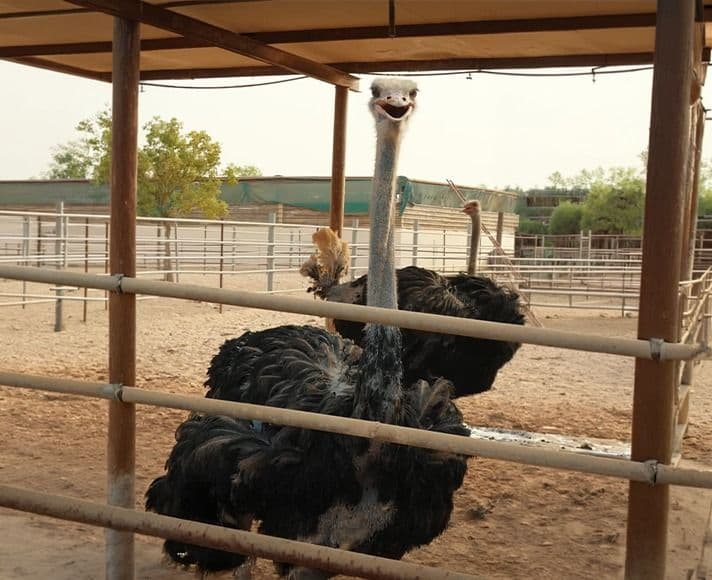
“I was asked what part of the ostrich do you not use? And I replied that we’ve yet to turn the sounds they make into a ring tone,” Fahed laughed. A few summers ago Shaikha Alketbi revealed through a conversation that her father, Fahed Alketbi, has ostriches on their family farm and would be happy to show me around. I shelved the idea of visiting the farm until schedules aligned, as Shaikha was away doing her masters in arts in Japan, and I wanted to see the farm through her eyes.
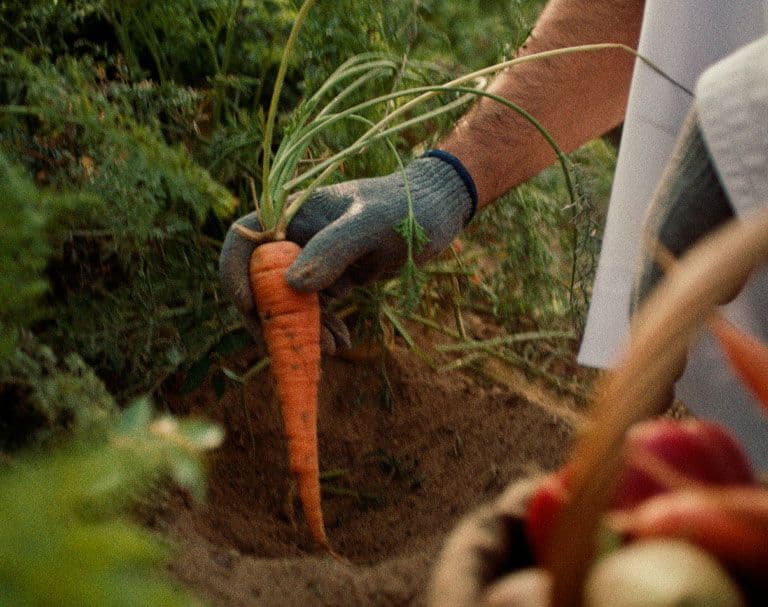
Long before the ostriches arrived though, the farm had already been part of the family. Camels, sheep, goats and palm trees filled the interests and passions of several family members, and, as Shaikha later explained, a desire to preserve a way of life that had long existed in the Emirates. Her father, Fahed, and his older brother Juma looked after the farm together, each finding their own place within it. Walking through the farm, that family structure still feels present (we passed and greeted Juma as we were looking at the ostriches). Today, the ostriches have become one of its defining features. Almost every part of the ostrich has found a purpose, from the meat to the feathers and eggs, reflecting an approach that leaves very little to waste. The first flock numbered little more than a dozen birds. Today there are around two thousand.
As we walked through the farm, Fahed moved comfortably between the birds, stopping to explain their behaviour, their needs, and the thinking behind how the farm is organised. The conversation rarely stayed with the ostriches for long before widening into ideas about farming, experimentation, and the gradual evolution of the place itself. There was a quiet creativity to the way he spoke about the farm, not only in how it functions today, but in how it continues to grow through new ideas. Shaikha later told me that her father's creativity had always been solution-oriented. Civil engineering, a military career, and later his position as a COO in a well known national real estate establishment never really sat apart from the farm; they quietly found their way back into it. She described stewardship as something that asks a person to be inventive. You could see that in the elevated goat enclosure designed so droppings fall through the perforated flooring and fertilise the soil below, or in the countless small decisions that make the farm thrive. She believes that way of thinking began with her grandfather, passed naturally to Fahed and his brothers, and is now finding different expressions in the next generation. Fahed has since received Sheikh Mansour's Small Farm Award, but even that feels less like an achievement he set out to pursue than recognition of a way of caring that had already existed for decades.
Shaikha followed this by sharing that her grandfather, Saeed, is where this sense of stewardship and its importance flows from. He held a position with Al Ain Municipality, caring for Al Hili Oasis and particularly its falaj irrigation systems. Stewardship, she explained, had long been part of the family's way of thinking.
The importance of this seems to have found its way into the next generation. Mohammed, his son, now runs the day-to-day operations of the farm.He oversees the branding, marketing and financial side of the business, looking after everything that comes in and goes out and has managed to develop products ranging from ostrich meat to flavoured ostrich jerky. Shaikha described the family's creativity as flowing from the same source while finding different outcomes in each person. Every now and then they gather around the television at home and share what each of them has been working on, opening ideas up to conversation and feedback before they make their way back into the farm. Working together, she said, relies on a trust that has been earned through care, and through a shared understanding of stewardship.
Shaikha's interests have taken her into the arts, and she has continued bringing artists to the farm whenever the need arises. Growing up on the farm, she carried it with her into her own practice, where ostriches have appeared as recurring motifs expressing both the farm and her relationship with her father, one of which was exhibited as part of the Public Art Biennial in Abu Dhabi.
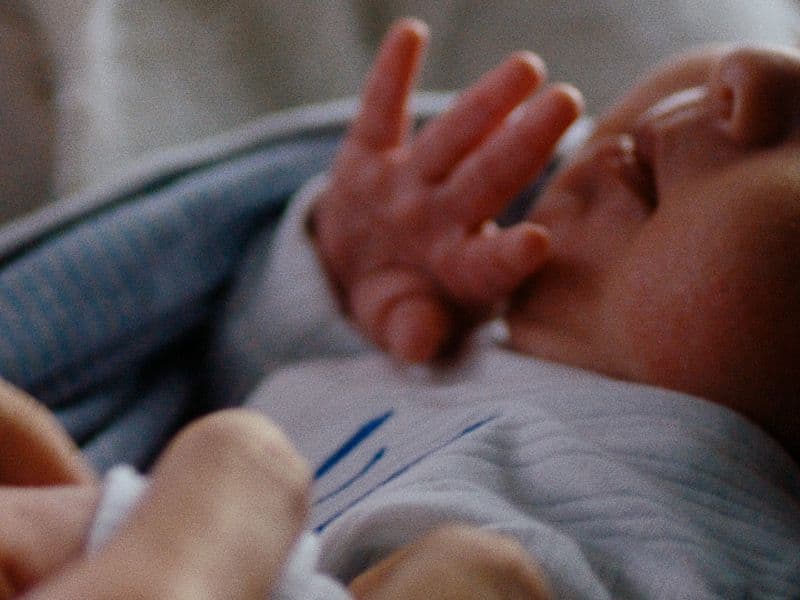
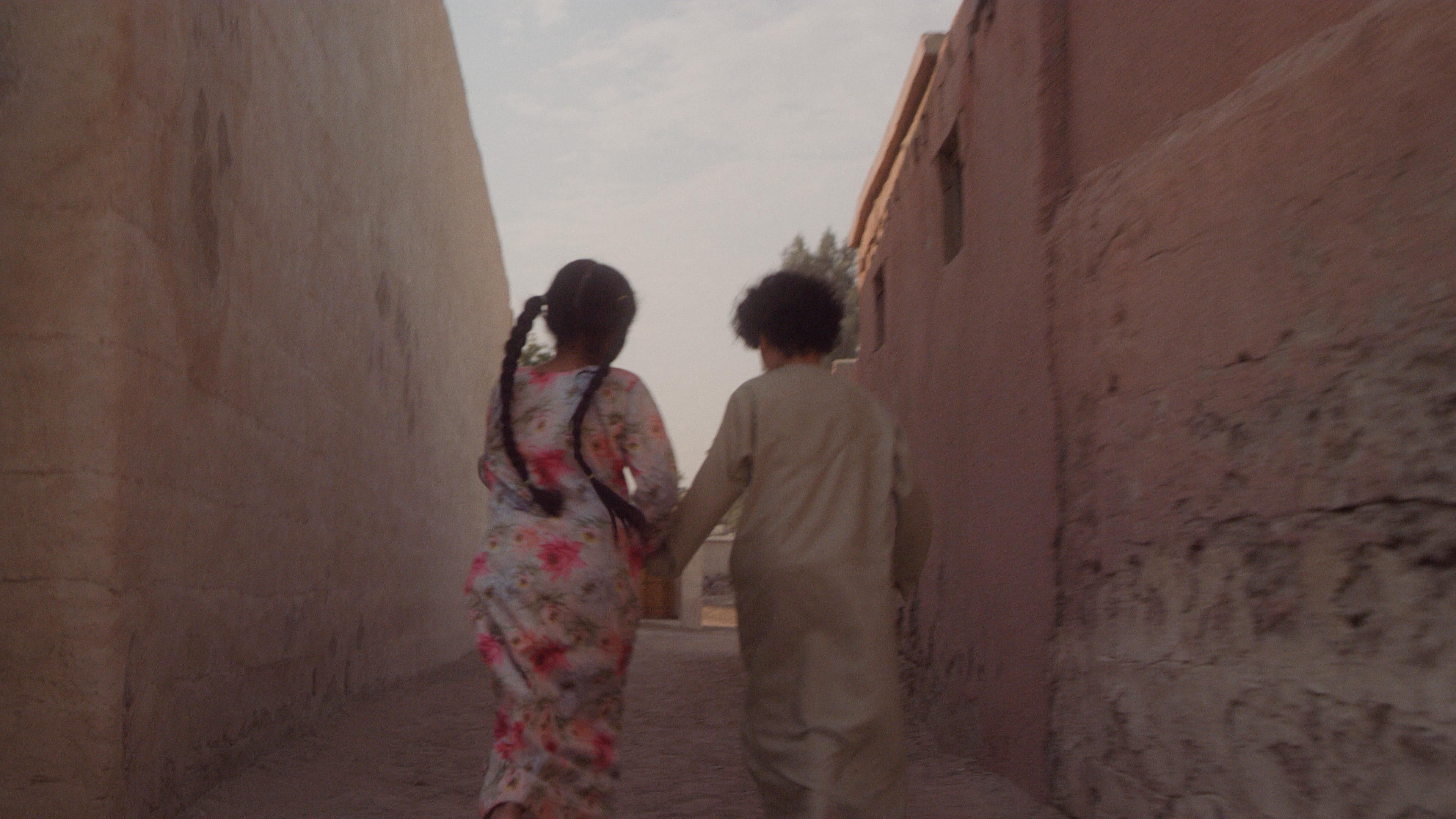
For now, the ostrich farm is a cherished and shared space for all family members. Shaikha's niece and nephew have grown up on the farm, and she says that's how they've come to know their grandfather. Hamad still talks about the goats licking his legs when he was younger, while Dana insists that the ostriches and baby goats are the cutest part of the farm. They're comfortable holding animals that many adults would hesitate to approach. "I bet they tell the other kids they have an ostrich farm," she laughed, "but I don't think anyone believes them!"
By the time I left, what stayed with me was not simply the scale of the ostrich farm, nor the novelty of standing among hundreds of birds. It was the way a family farm continues to evolve without letting go of its foundations. Agriculture, entrepreneurship, hospitality, and the arts are all beginning to occupy the same landscape, each carried by a different member of the family. What began with a shared passion for animals has gradually become something broader, each generation translating the same inherited creativity differently while remaining rooted in the same landscape.